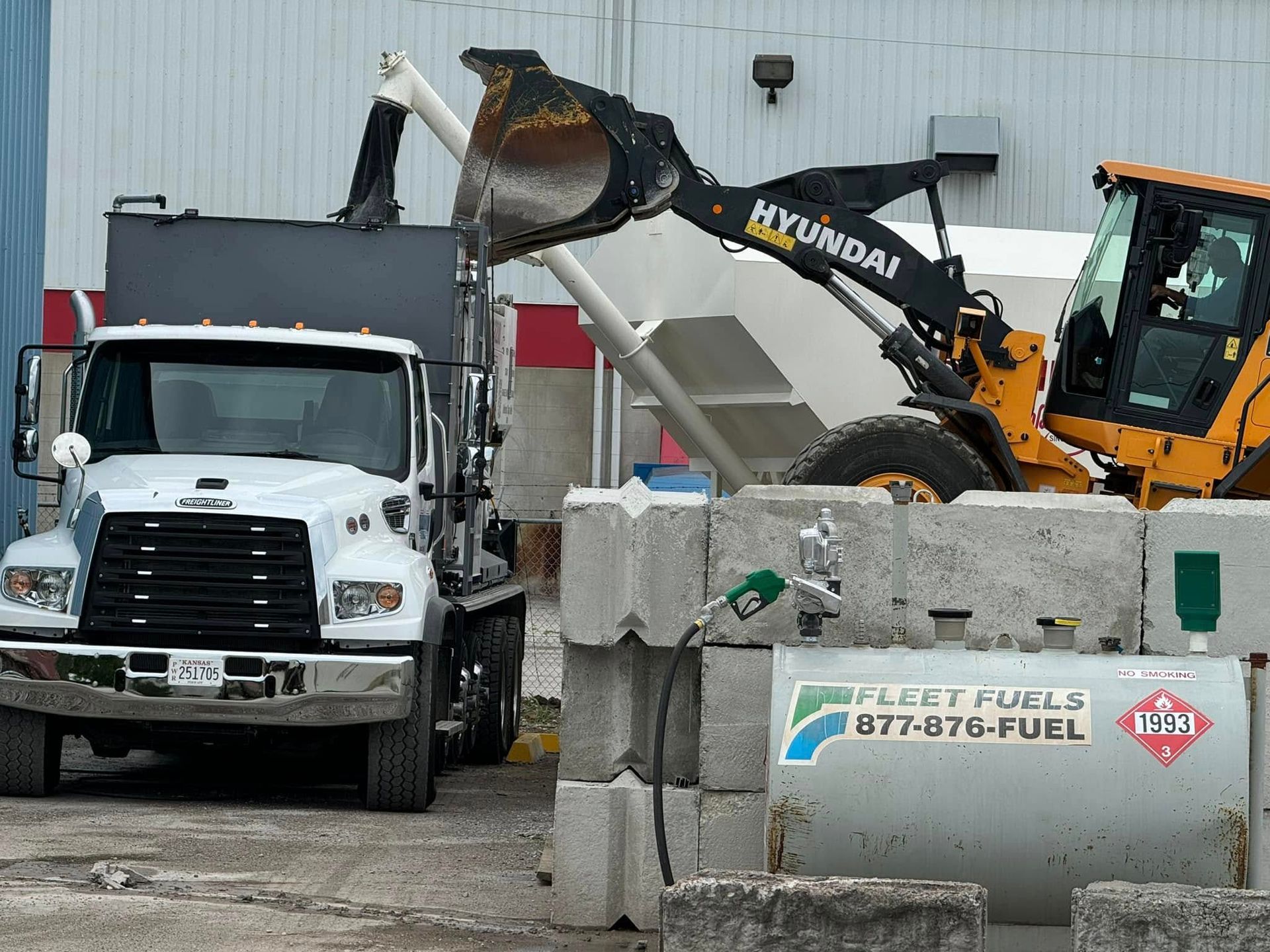
Why On-Site Concrete Mixing Is Better Than Traditional Batch Delivery
On-site concrete mixing is better than traditional batch plant delivery because it provides fresher concrete, precise quantity control, reduced waste, and real-time mix adjustments. For contractors and property owners in Kansas City, this means fewer delays, better strength performance, and lower overall project risk. Instead of relying on pre-mixed concrete that begins curing during transport, on-site mixing ensures your concrete is prepared exactly when and where you need it.
In today’s fast-paced commercial and industrial construction environment, that difference matters.
How Traditional Batch Plant Delivery Works
With traditional delivery:
- Concrete is mixed at a central batch plant.
- It is loaded into a truck.
- The truck transports it to your job site.
- The hydration process begins immediately after mixing.
While this system has been used for decades, it has limitations — especially in metro areas like Kansas City where traffic, weather, and job site delays are common.
Common Issues with Batch Plant Delivery
- Concrete begins curing during transport
- Traffic delays impact slump and workability
- Overordering is common to avoid shortages
- Short-load fees increase costs
- Returned concrete becomes waste
By the time concrete arrives, contractors often have limited flexibility.
What Is On-Site Concrete Mixing?
On-site mixing means the raw materials are transported separately and mixed at your job location using a mobile batching system.
This allows:
- Concrete to be mixed fresh at the point of placement
- Adjustments to be made instantly
- Exact yardage control
- Continuous pouring without rush pressure
Instead of racing against a curing clock, contractors gain control over timing and consistency.
Freshness Directly Impacts Strength
Concrete strength depends on proper hydration and curing conditions.
According to the American Concrete Institute, temperature and timing significantly influence compressive strength development.
In Kansas City summers, heat accelerates curing. In winter, cold slows hydration. If concrete sits too long in a truck during transit, performance can suffer.
With on-site mixing:
- The hydration process begins when you’re ready
- Slump can be adjusted for conditions
- Mix consistency remains optimal
- Structural integrity improves
For industrial floors and commercial foundations, this can make a measurable difference.
Reduced Waste Saves Money
One of the biggest hidden costs in traditional delivery is overordering.
Contractors frequently add extra yardage to avoid running short. That excess concrete:
- Must be disposed of
- Creates cleanup costs
- Increases environmental impact
On-site mixing eliminates this issue.
You Only Pay for What You Use
If your slab requires 42.3 yards, you get exactly that — not 45 yards “just in case.”
This is especially beneficial for:
- Phased pours
- Irregular slab designs
- Residential driveways
- Custom foundation layouts
Waste reduction improves margins.
Better Scheduling Flexibility
Construction projects rarely run perfectly on schedule.
Common delays include:
- Inspection hold-ups
- Weather changes
- Equipment breakdowns
- Labor adjustments
With batch delivery, if your site isn’t ready when the truck arrives, you’re under pressure.
With on-site mixing:
- Start times are more flexible
- Pour rates can be adjusted
- Mix changes can be made mid-project
- Extended work hours are possible
This flexibility is critical for Kansas City commercial contractors working under tight deadlines.
Improved Quality Control for Large Projects
Industrial and commercial projects demand precision.
Applications such as:
- Warehouse slabs
- Loading docks
- Structural footings
- Multi-story developments
require consistent PSI strength and controlled slump levels.
On-site mixing allows:
- Real-time monitoring
- Immediate additive adjustments
- Continuous supply without cold joints
That level of control reduces structural risk.
Environmental Benefits of On-Site Mixing
Sustainability is becoming increasingly important in commercial construction.
On-site mixing reduces:
- Returned concrete waste
- Overproduction
- Unnecessary material disposal
Because materials are batched as needed, environmental impact decreases compared to traditional overproduction methods.
Kansas City Climate Considerations
Kansas City experiences:
- Freezing winters
- Hot, humid summers
- Rapid seasonal transitions
The Portland Cement Association outlines how temperature directly affects set time and durability.
With on-site mixing, adjustments can be made immediately to account for:
- Cold-weather curing
- Accelerators or retarders
- Moisture conditions
- Ambient temperature changes
This adaptability is especially important for Midwest construction.
When Batch Delivery May Not Be Ideal
Batch delivery may create challenges when:
- Traffic delays are unpredictable
- Job sites are difficult to access
- Precise yardage is required
- Long pour durations are needed
- Phased concrete placement is planned
In these scenarios, on-site mixing often proves superior.
Who Benefits Most from On-Site Mixing?
Commercial Contractors
Large-scale slab pours benefit from flexibility and volume control.
Industrial Developers
High-strength, heavy-load floors require consistent quality.
Residential Builders
Driveways, patios, and foundations benefit from fresh, adjustable mixes.
Municipal Projects
Infrastructure work often requires precise quantities and scheduling adaptability.
Frequently Asked Questions
Is on-site mixing more expensive?
Not necessarily. Many contractors save money by eliminating overordering, short-load fees, and waste disposal costs.
Does on-site mixing affect strength?
Yes — positively. Freshly mixed concrete at the job site can improve consistency and performance.
Can large projects be handled?
On-site mixing is ideal for large industrial and commercial projects requiring extended pour times.
What about weather conditions?
On-site mixing allows adjustments for Kansas City’s hot summers and cold winters.
Is it available for residential jobs?
Yes. Residential projects benefit from precise yardage and reduced waste.
Why More Kansas City Contractors Are Switching
The construction industry is shifting toward efficiency, sustainability, and quality control.
On-site concrete mixing offers:
- Fresher concrete
- Lower waste
- Better cost control
- Flexible scheduling
- Improved structural integrity
For contractors in Kansas City, those advantages directly impact profitability and project success.
Schedule Your Next Pour with Confidence
If you’re planning a commercial, industrial, or residential concrete project in Kansas City, choosing the right delivery method matters.
On-site mixing provides the control, freshness, and cost efficiency that modern construction demands.
Call +1 (816) 432-3200 to request a free estimate and discuss your project needs today.
Make your next concrete pour stronger, smarter, and more efficient.