How Much Concrete Do I Need for a Driveway, Patio or Slab?
To calculate how much concrete you need, multiply the project's length by width by thickness in feet, then divide the result by 27. That converts cubic feet into cubic yards. For example, a 20-by-20-foot slab poured 4 inches thick requires about 4.94 cubic yards before accounting for actual site conditions.
The formula is simple, but real-world concrete projects rarely match perfect measurements. That is where accurate estimating and on-site volumetric mixing can be especially valuable.
How to Calculate How Much Concrete You Need
The Basic Concrete Calculator Formula
Use this formula:
Length × Width × Thickness ÷ 27 = Cubic Yards
Remember that thickness must be expressed in feet.
Common conversions include:
- 4 inches = 0.333 feet
- 5 inches = 0.417 feet
- 6 inches = 0.5 feet
Example: Calculating a 20 × 20 Slab
For a 20 × 20 slab at 4 inches:
20 × 20 × 0.333 = approximately 133.2 cubic feet
133.2 ÷ 27 = approximately 4.93 cubic yards
That is the theoretical volume. Actual requirements can differ because excavation and grading aren't always perfectly uniform.
How Much Concrete Does a Driveway Need?
Consider a driveway measuring 12 feet wide and 40 feet long with a planned thickness of 4 inches.
12 × 40 × 0.333 = approximately 159.8 cubic feet
159.8 ÷ 27 = approximately 5.92 cubic yards
A larger two-car driveway measuring 20 × 40 feet at the same thickness would theoretically require about 9.87 cubic yards.
The appropriate thickness and concrete specification should be determined based on anticipated loads, design requirements and local conditions rather than simply copying a generic example.
How Much Concrete Does a Patio Need?
A 15 × 20-foot patio poured 4 inches thick requires:
15 × 20 × 0.333 ÷ 27 = approximately 3.7 cubic yards
A 20 × 20-foot patio at 4 inches requires approximately 4.93 cubic yards.
Patios with curves, steps, thickened edges or irregular shapes can be harder to estimate accurately.
That's one reason volumetric concrete is useful for residential work: material can be mixed on site as the placement progresses rather than relying entirely on a fixed volume loaded before arrival.
How Much Concrete Does a Garage Slab Need?
A 24 × 24-foot garage slab at 4 inches thick theoretically requires about 7.1 cubic yards.
At 5 inches thick, the same footprint would require approximately 8.9 cubic yards.
Again, these calculations cover volume only. They don't determine whether a particular thickness or mix is appropriate for your structure.
Why Is My Actual Concrete Usage Different?
Several job-site factors can increase or decrease actual consumption:
- Uneven excavation
- Changes in subgrade elevation
- Thickened edges
- Footings
- Irregular forms
- Sloped areas
- Embedded features
- Measurement errors
Traditional ordering often deals with this uncertainty by adding a safety margin.
But adding too much creates unnecessary expense and waste.
How On-Site Mixing Changes the Equation
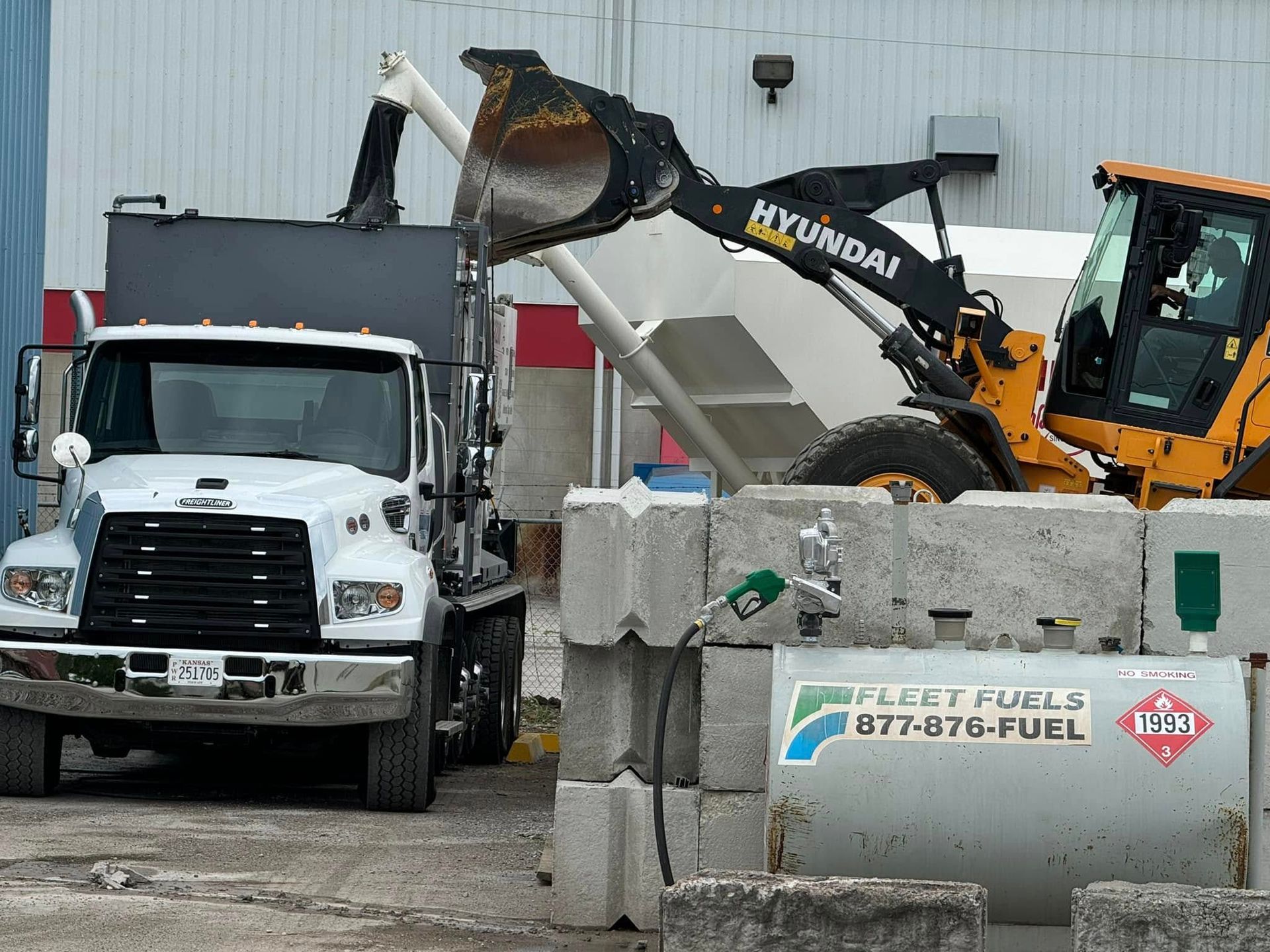
Custom Readi Mix uses volumetric trucks that keep the concrete ingredients separate until the material is produced at the job site. Concrete is metered during delivery, allowing customers to receive the amount actually needed rather than relying entirely on a predetermined batch.
That means you should still calculate your estimated yardage carefully, but a small estimating discrepancy doesn't necessarily create the same problem as it can with a predetermined batch.
When Is Volumetric Concrete Especially Useful?
This is especially useful for:
- Irregular driveways
- Repair pours
- Sidewalk sections
- Footings
- Piers
- Curbs
- Remodel projects
Should I Order Extra Concrete?
With conventional delivery, contractors often build a contingency into their order because running short can be expensive.
With volumetric delivery, the strategy can be different because the concrete is produced at the site.
However, the truck still has finite material capacity. A major estimating error can exceed what was planned for the delivery.
The best approach is to provide accurate dimensions when requesting your quote and explain unusual project features before scheduling.
What Information Should I Provide When Requesting a Quote?
When requesting an estimate, have information such as:
- Project location
- Project type
- Approximate square footage or yardage
- Preferred delivery date
- Known PSI or mix specifications
- Any unusual site-access conditions
What Is the 3-Yard Minimum?
For smaller Kansas City projects, minimums matter.
Custom Readi Mix currently has a 3-yard minimum fee for deliveries. If your project requires substantially less than three yards, discuss the economics of the delivery before scheduling.
For example, you may have a small pad requiring less than three yards but also need a walkway or another compatible concrete project completed.
Combining compatible projects may make better use of the delivery minimum when the mix specifications and scheduling needs are appropriate.
How Do I Measure My Project Before Ordering Concrete?
Before requesting concrete, gather:
- Length of each pour area
- Width of each area
- Planned thickness
- Footing or thickened-edge dimensions
- Approximate job-site access
- Required mix specification, if known
- Preferred delivery date
How to Measure Irregular Areas
For irregular areas, divide the project into smaller rectangles or other measurable shapes. Calculate each separately and combine the totals.
For example, imagine an L-shaped patio. Instead of trying to calculate the entire shape at once, divide it into two rectangles. Calculate the cubic yards for each section, then add them together.
This usually produces a more accurate estimate.
What Concrete Specifications Do I Need for My Project?
A cubic-yard calculation tells you volume, not the proper concrete specification.
It does not determine:
- Required compressive strength
- Reinforcement
- Air entrainment
- Slump
- Base preparation
- Joint layout
- Required thickness
Those decisions should follow project plans, engineering requirements and applicable local standards.
Why Accurate Concrete Estimates Save Money
Ordering the right amount of concrete affects more than the material bill.
What Happens If You Underestimate Concrete?
Underestimating can lead to:
- Interrupted pours
- Additional delivery costs
- Crew downtime
- Scheduling problems
- Potential placement complications
What Happens If You Overestimate Concrete?
Overestimating can lead to:
- Wasted concrete
- Disposal issues
- Unnecessary material expense
- Additional cleanup
The goal isn't simply to order "a little extra." It's to calculate carefully and use a delivery method that gives the project reasonable flexibility.
This is one of the strongest advantages of volumetric concrete delivery.
How Can Kansas City Homeowners Prepare for Concrete Delivery?
Before searching for “concrete delivery near me” and scheduling a truck, make sure the site is actually ready.
Forms should be complete, the base should be prepared, and your placement crew should be ready to work.
Also consider truck access.
What Should I Check Before Concrete Delivery?
Questions to answer before delivery include:
- Can the truck safely reach the property?
- Are parked vehicles blocking access?
- Are there overhead obstacles?
- Is the placement area far from the truck?
- Does the contractor have the necessary equipment and labor?
Addressing these issues beforehand helps prevent delays on pour day.
Frequently Asked Questions About Concrete Calculations
How Many Cubic Feet Are in One Cubic Yard of Concrete?
There are 27 cubic feet in one cubic yard of concrete.
How Much Concrete Do I Need for a 10 × 10 Slab at 4 Inches?
A 10 × 10-foot slab at a uniform 4-inch thickness theoretically requires approximately 1.23 cubic yards of concrete.
How Much Concrete Do I Need for a 20 × 20 Slab at 4 Inches?
Approximately 4.93 cubic yards before accounting for actual field conditions.
How Much Concrete Do I Need for a 24 × 24 Garage Slab?
At a uniform 4-inch thickness, approximately 7.1 cubic yards. At 5 inches, approximately 8.9 cubic yards.
Should I Round Up My Concrete Order?
You need enough material to complete the placement, but excessive rounding can create unnecessary waste. Volumetric delivery can help manage smaller differences between estimated and actual consumption.
Can Someone Help Calculate My Concrete Yardage?
Yes. Providing accurate dimensions when requesting a quote gives your concrete supplier the information needed to help assess expected volume.
Need Concrete for Your Kansas City Project?
Whether you're pouring a driveway, patio, garage slab, sidewalk or foundation, accurate volume planning is the first step.
On-site volumetric concrete mixing provides additional flexibility by allowing concrete to be produced at the job site and metered according to actual usage.
If you're looking for ready mix concrete near you in Kansas City, KS or the surrounding metro, call (816) 432-3200 with your project dimensions.